
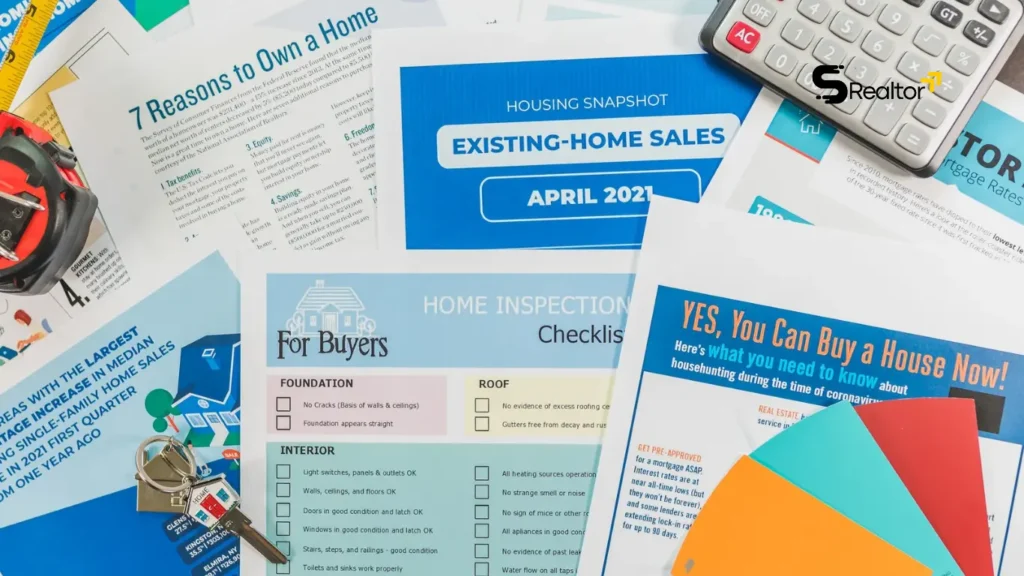
Real estate flyer design is the work of turning a listing, an open house, or your own services into a single page that a buyer or seller can read in seconds and act on. A good flyer looks professional, carries the right legal details, and gives the reader one clear next step. A weak one is crowded, inconsistent with your brand, and sometimes noncompliant without the agent realizing it.
This guide covers what a flyer needs to do, the parts every flyer should include, the design choices that make it readable, the advertising and fair housing rules that apply, print and digital specs, and what to ask before you hire a designer. If you want a team to produce flyers for every listing, our brand and listing design service handles it.
What a Real Estate Flyer Has to Do in Ten Seconds
Most people look at a flyer for a few seconds before deciding whether to keep it. That means each flyer needs one job, and the design should serve that job.
The common types are:
- Just listed flyers, which announce a new property to the neighborhood and your network.
- Open house flyers, which give the date, time, and address with a clear reason to attend.
- Price change flyers, which restart interest in a listing.
- Just sold flyers, which show recent results to nearby homeowners.
- Seller service flyers, such as a home value offer aimed at a farm area.
- Buyer service flyers, such as a local buyer guide or new listing alert.
- Market snapshot flyers, which summarize recent sales in a neighborhood.
Pick one type per page. A flyer that tries to announce a listing, promote your valuation offer, and introduce your team at the same time usually does none of them well.
The Parts Every Flyer Needs, in Order of Importance
Think of the page as a ranking of what the reader should notice first.
- A strong lead image, usually the best exterior or interior photo of the home, or a clear headline for service flyers.
- A headline that says what the page is, such as Just Listed or Open House Sunday.
- The key facts: price, bedrooms, bathrooms, size, and the address or neighborhood.
- Three to five highlights that set the home apart, written in plain language.
- Contact information and one call to action, such as a phone number, a booking link, or a QR code.
- Your brand and your broker’s information, placed where the rules require.
- Any logos your broker requires. Many brokers ask for the Equal Housing Opportunity logo on advertising, so confirm your broker’s policy.
Leave out anything that does not help the reader act. Extra photos, long descriptions, and decorative graphics usually hide the details that matter.
Real Estate Flyer Design Best Practices That Make a Page Easier to Read
Real estate flyer design best practices come down to restraint and consistency.
- Use one hero photo and, at most, a few supporting images. High quality photos matter more than the number of photos.
- Stick to two fonts, one for headlines and one for text, and keep the sizes consistent between flyers.
- Use your brand colors, and make sure text has strong contrast against the background so it can be read at a glance.
- Leave white space. A page with room around the text feels more professional than one filled edge to edge.
- Keep the descriptions short. Features read faster as a few short lines than as a paragraph.
- Place the call to action where the eye finishes reading, usually near the bottom, and make it specific.
- Add a QR code only if it leads somewhere useful, such as the listing page or a booking page. Test it before printing and use a clean, short link.
- Keep every flyer visibly part of the same family, so a neighbor who has seen two of them recognizes the third.
Luxury real estate flyer design follows the same logic with more restraint: fewer words, larger photography, and a calmer layout. Real estate agent flyer design for a service offer, such as a home value report, needs the same discipline, with a single benefit and one way to respond. If you want the identity behind your flyers built properly, our guide to real estate branding services explains how a brand system makes every piece easier to produce.
Real Estate Flyer Design Rules: Broker Name, Team Names, Fair Housing, and Logos
Flyers are advertising, and advertising has legal rules. This is general information, not legal advice. Confirm the details with your managing broker.
Start with who must appear on the page. The Texas Real Estate Commission’s FAQ defines an advertisement to include brochures, signs, business cards, and electronic media, which covers flyers. Under its advertising rule, each ad must show the name of the license holder or team and the broker’s name at no less than half the size of the largest contact information. The rule text lists a scan code among the items that count as contact information, so ask your broker how the size comparison applies if your flyer carries a large QR code. TREC’s FAQ also says team names must be registered and must end in “team” or “group.” Other states have their own rules, so use your state’s version.
Next, fair housing. The Fair Housing Act makes it unlawful to make, print, or publish any advertisement for the sale or rental of a dwelling that indicates a preference, limitation, or discrimination based on race, color, religion, sex, handicap, familial status, or national origin. The practical rule, as one fair housing organization puts it, is that a housing advertisement should describe the property and not the potential occupant. Wording such as “no children” is an obvious problem, and phrases that point at a type of buyer, such as “perfect for young families,” can be read as signaling a preference, so describe the home and let readers decide.
Then logos and photos:
- Follow NAR’s rules for the REALTOR® marks. The Membership Marks Manual says the marks may never be incorporated into the legal name of a member’s real estate business.
- Follow your brokerage or franchise brand rules, which often control logo placement and approved colors.
- Use only photos you own or have licensed for marketing use. Photographer and MLS photo terms can limit where an image appears.
- Have your broker review a new flyer template once, so every flyer built from it starts compliant.
Print Specs and Digital Versions
Most flyers are used twice: printed for open houses and mailings, and shared digitally by email, text, and social media. Plan both from the start.
For print, common industry practice is to use images at 300 dots per inch, build the file with a small bleed so color reaches the edge after trimming, and use CMYK color. Letter size is the standard page for handouts. Ask your printer for their exact requirements and request a proof before a large run.
For digital, export a PDF for email and a compressed image for social posts. Keep file sizes small enough to send easily, and make sure the QR code and any links still work in the digital version.
Before anything goes to print, check:
- Every name, phone number, price, and address against the listing.
- The broker’s name and any team name, in the right size and place.
- The wording for fair housing.
- Photo rights.
- The QR code, tested on a phone.
- The proof, read from top to bottom by a second person.
Templates, Freelancers, or a Managed Design Team
Each route fits a different situation.
Template tools and do it yourself designs are fast and inexpensive, and they suit a new agent with a few flyers a month. The tradeoff is that flyers often look like everyone else’s, and consistency and compliance depend on you.
A freelance designer gives you personal attention and a custom look. The tradeoff is availability, since one person has to be free when your listing goes live, and real estate rules may be new to them.
A managed design team produces flyers to a repeatable process, with templates built once and reused for every listing. The tradeoff is that you need a clear scope and an approval flow with your broker.
Teams and brokerages with many listings usually get the most from a managed process, because the cost of a delayed or inconsistent flyer adds up across agents.
What Real Estate Flyer Design Services Cost
There is no reliable public price benchmark for flyer design, and published figures mostly come from companies selling the service. It is more useful to understand the pricing structures.
Common models include a fee per flyer, a set of custom templates with a fee for each customized version, or a monthly retainer that covers a set number of designs. What changes the price is the number of flyers, how custom the design is, how fast you need it, and whether print production and digital versions are included.
When you collect quotes, ask:
- What is included in each design, and how many revisions?
- How fast is the turnaround for a new listing?
- Do I receive editable source files?
- Who owns the final designs, and who handles photo and font licensing?
- How are broker requirements and fair housing handled?
- Is printing included or handled separately?
Compare the cost per listing launch across a month, not the price of a single flyer.
A Simple Workflow for Listing Launch Flyers
A repeatable process makes flyers faster and safer.
- Collect the listing details, price, photos, and your broker’s required information.
- Write the highlights and the headline in plain, property focused language.
- Build the flyer from your approved template.
- Check the broker lockup, team name, logos, and fair housing wording.
- Send it to your broker or reviewer if your policy requires approval.
- Export a print file and a digital version.
- Track responses by using a unique link or QR code for each flyer, so you know which flyers bring inquiries.
Our content and video editing and social media management services can turn the same listing assets into videos and posts, so the flyer is one part of a launch and not a separate task.
Questions to Ask Before You Hire a Flyer Designer
Get written answers to these before you commit:
- Have you designed for real estate, and can I see examples?
- How do you handle my broker’s advertising rules and my state’s requirements?
- What is the turnaround for a new listing?
- Which file formats do I receive?
- Who owns the designs and the source files?
- How many revisions are included?
- What are the contract terms, and how do I cancel?
How Scale Realtor Handles Real Estate Flyer Design
Scale Realtor has run real estate operations since 2018. Flyer and listing design sits inside our marketing and branding department, alongside social media management, real estate SEO services, and paid ads, so your flyers, social posts, and listing pages follow one brand. You work with one account manager, and reporting is weekly once your department is live.
Engagements begin with a free discovery call, an NDA, and secure role based access, and most clients hand off their first function within a week, with no long contracts required to start. To see what a flyer system would look like for your listings, contact us to book a discovery call.
Frequently Asked Questions
Pricing is usually per flyer, per customized template, or a monthly retainer. Compare what each includes, such as revisions, turnaround, and file formats.
A strong lead image, a clear headline, key facts, a few highlights, one call to action, and your brand and broker information.
In many states, yes. Texas, for example, requires the broker's name at no less than half the size of the largest contact information. Check your state's rule and your broker's policy.
After a discovery call, an NDA, and secure access, most clients hand off their first function within a week.


