
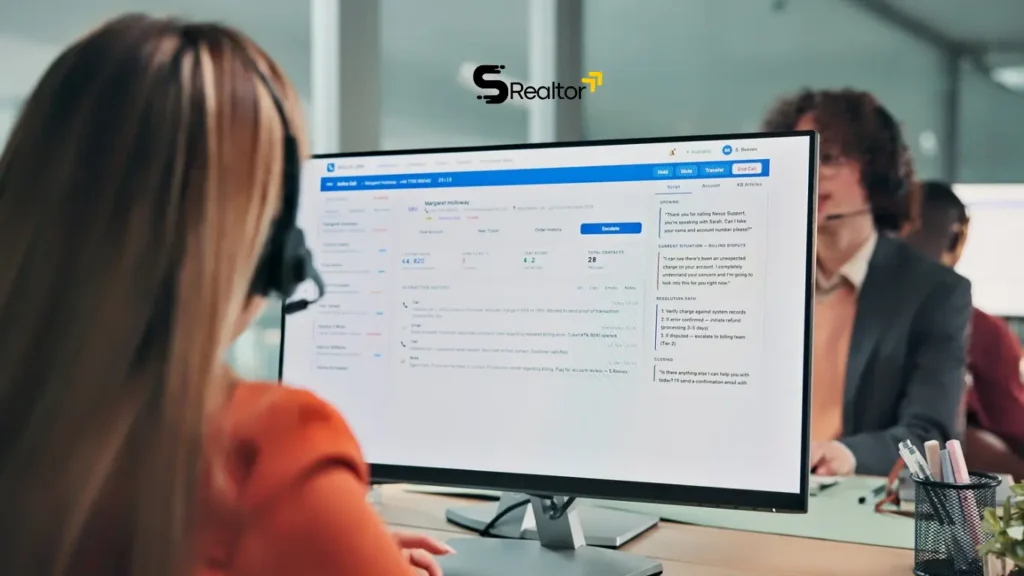
Real estate virtual assistant services give agents, teams, and brokerages remote help with the admin, data, and follow-up work that keeps them away from clients. Done well, they return hours every week. Done badly, they add compliance risk, security gaps, and one more person to manage.
This guide covers what to delegate, what to keep away from an unlicensed assistant, how the cost compares with an in-house hire, how to protect client data, and what to confirm before you sign. If you already know what you need, our virtual assistant service page shows how we staff it.
Real Estate Virtual Assistant Services vs. Other Ways to Get Admin Help
Most agents have four options when the paperwork starts piling up. Each one fails in a different place.
Option | Best for | Where it works | Where it breaks |
Do it yourself | New agents with spare hours | No added cost | Admin crowds out prospecting and client time |
In-house employee | Established teams with a manager | Close supervision, full-time presence | Payroll, training, and coverage gaps when they leave |
Freelance virtual assistant | Solo agents with a small, steady task list | Flexible and low commitment | One person is a single point of failure |
Managed virtual assistant service | Teams that want continuity and several skills | Backup coverage and defined processes | Needs vetting and clear reporting |
The practical difference between the last two is continuity. A freelancer who gets sick, takes a better job, or goes quiet leaves your workflow stalled. A managed service is built so the work continues when one person is out.
Tasks You Can Hand to a Virtual Assistant Today
Most real estate admin falls into a handful of repeatable categories. These are the ones that tend to delegate cleanly.
Inbox, calendar, and client communication
Email triage, calendar management, appointment reminders, and routine client updates are the easiest place to start. Texas Real Estate Commission guidance confirms that an unlicensed assistant may arrange a showing appointment on behalf of the license holder who will show the property, and may confirm details that were already advertised, such as bedrooms or price.
CRM updates and database hygiene
A CRM is the software that stores every contact and conversation. Duplicate records, missing tags, and stalled campaigns are common, and they are exactly what a trained assistant can fix. Our CRM management and database cleanup and management services cover this work, and it often pays back quickly because clean data makes every follow-up more accurate.
Listing prep and MLS data entry
Entering listing details, uploading photos, and keeping records current are data tasks. TREC’s guidance allows unlicensed assistants to input data and type contracts when a license holder specifically directs it. Our listing coordination service is built around this kind of preparation work.
Transaction timelines and deadline tracking
Tracking contract dates, collecting documents, sending reminders, and keeping everyone updated are time-consuming and error-prone when done between showings. A transaction coordinator handles this administrative layer so deadlines don’t slip. The legal limits matter here, so see the compliance section below.
Marketing support
Scheduling social posts, editing short videos, and preparing listing graphics can all be delegated. Our social media management and content and video editing services handle these tasks. Treat anything that counts as advertising as something your broker should review, because in some states, including Texas, the broker is responsible for the advertising their agents run.
Research and lead data
Pulling market comparisons, building prospect lists, and finding accurate contact details are common uses of virtual assistant services for real estate. Our MLS and market research and skip tracing and list building services cover this work, and it feeds directly into outreach.
Tasks to Keep Away From an Unlicensed Virtual Assistant
This is the section most agents skip, and it is where the real risk sits. A virtual assistant is usually not a licensed agent unless you confirm otherwise, and state law decides what an unlicensed person may do.
TREC’s guidance makes the principle clear. Whatever an assistant’s title is (unlicensed assistant, administrative assistant, office manager, or transaction coordinator), license status determines what they can legally do. For Texas, the same article says an unlicensed assistant cannot:
- Call people to find out whether they want to buy, sell, or lease, even to set a follow-up appointment with a license holder.
- Unlock a door or give access to a property, or host an open house.
- Review a contract or facilitate a transaction, though they can enter data into one when directed by a license holder.
The penalties fall on both sides. TREC notes that performing brokerage activity without a license, and employing someone who does, can be a Class A misdemeanor in Texas, and the commission can also discipline the broker or agent involved.
Other states draw the lines differently. NAR publishes a state-by-state table of statutes and regulations for unlicensed assistants, though its last review was in 2020, so confirm the current rule with your state commission or managing broker. Outbound prospecting is the most regulated task, so settle how your state treats it before assigning it to anyone. If calling is part of your plan, talk to your broker about how your state treats it before you choose a provider. Our inside sales and cold calling team can walk you through how that setup works.
What Real Estate Virtual Assistant Services Cost Compared With an In-House Hire
The most reliable public benchmark for an in-house admin hire is federal wage data. The U.S. Bureau of Labor Statistics reports a median annual wage of $47,460 for secretaries and administrative assistants in May 2024, or $22.82 an hour. That is wages only.
An employee also brings payroll taxes, benefits, equipment and software, recruiting and training time, your own management hours, and gaps in coverage during vacations and sick days. None of that appears in the hourly rate, so it is easy to underestimate.
Virtual assistant pricing follows a few common models: an hourly rate, a monthly block of hours, or a retainer tied to a function. Because scope varies so much, don’t compare headline rates alone. Ask what’s included, how many hours or tasks that covers, who covers absences, and how work is reported, then compare the cost of work actually delivered.
Hiring a Freelancer Directly: The Classification and Continuity Catch
Hiring an individual virtual assistant yourself looks cheapest, but it comes with two catches.
The first is worker classification. The IRS looks at behavioral control, financial control, and the relationship between the parties to decide whether someone is an employee or an independent contractor. It also states that a written contract alone isn’t enough to settle the question. If you set their hours and dictate exactly how they work, you may be treating them like an employee. Ask your accountant or attorney before you start.
The second is continuity. One person holds all your processes in their head. When they leave, you start over.
Protecting Client Data and Closing Funds When Someone Remote Has Access
Anyone with access to your email, CRM, and transaction files is part of your security picture, and real estate is an active target for fraud. The FBI’s report on business email compromise and real estate wire fraud notes that victims have included people at every level of a transaction, including title companies, law firms, and real estate agents.
Sensible safeguards for any assistant, remote or in the office:
- Give access only to the systems and folders the role needs, and remove it when the work ends.
- Use multi-factor authentication and a shared password manager instead of sending passwords by email.
- Require a signed confidentiality agreement before sharing client information.
- Never let an assistant change or send wire instructions on their own. Verify any payment instruction by calling a number you already know.
What to Confirm Before You Sign
Before committing to any provider, I’d ask for clear written answers to these:
- Who will actually do the work, and what training do they have in real estate?
- Which tools and CRMs do they work in every day?
- How is coverage handled when someone is out?
- What does reporting look like, and how often do you receive it?
- How is access to your data granted, limited, and removed?
- Is there a confidentiality agreement before access begins?
- What are the contract terms, and how do you cancel?
How Scale Realtor’s Virtual Assistant Service Works
We built our virtual assistant service around the problems above. Instead of one person juggling everything, you get trained specialists organized by function, with one account manager as your single point of contact. Coverage doesn’t depend on a single individual being available.
Engagements start with a free discovery call to map where your time and pipeline are leaking, then an NDA and secure, role-based access. Our team works daily in Follow Up Boss, kvCORE, Lofty, BoldTrail, GoHighLevel, Chime, SkySlope, and KW Command. Most clients hand off their first function within a week, and many begin with admin support, compliance support, or a transaction coordinator, then add departments as they grow.
If you’d like to see which function would return the most time first, contact us to book a discovery call.
Frequently Asked Questions
They are remote support for agents and teams covering admin, CRM, listing prep, transaction tracking, marketing tasks, and research. Work is done by trained assistants instead of an in-house employee.
Pricing is usually hourly, a monthly block of hours, or a function-based retainer. Compare what each includes, such as coverage, tools, and reporting, rather than the headline rate.
It depends on your state and the assistant's license status. Texas, for example, bars unlicensed assistants from calling to gauge interest, so check with your broker first.
Our team works in Follow Up Boss, kvCORE, Lofty, BoldTrail, GoHighLevel, Chime, SkySlope, and KW Command, among others.
After a discovery call, an NDA, and secure access, most clients hand off their first function within a week.
Every engagement starts with a signed NDA, role-based access, and secure credential sharing. Access ends when the engagement ends.
No long contract is required to start. Confirm the term and cancellation process in writing before you begin.
One assistant suits a small, steady task list. A team fits better when you need several skills, such as admin, CRM, and marketing, with coverage when someone is out.